
Remote Ops
Latency, single mobile-to-mobile link*
| Video | < 50 ms | < 85 ms |
|---|---|---|
| Control | < 20 ms | < 40 ms |
| 29.9 / 30 fps | 29.6 / 30 fps | |
| Strong 5G, low compute load | Weak 5G, high compute load |
Features
No WebRTC. Own stack: hole punching, transport, loss recovery, rate control, sender, player.
Proprietary adaptive bitrate (ABR)
Designed for bad forest 5G NSA links.
40 ms lower G2G than WebRTC
Measured on the same link.*
In testing: Link bonding
Several mobile links and Starlink as one.
In dev: Own RF link
Own radio to a base station, NLOS.
Smart cameras
Cameras follow the driving direction. Feeds not in use pause to free bandwidth.
Own hole punching
Direct P2P link between vehicle and operator.
Safety
Auto-stops on dropped frames. Drives on when the link returns.
Link-loss fallback
Tracks back autonomously if the connection is lost.
How it worksIn any terrain, fast or slow and precise.
Any computer, anywhere.
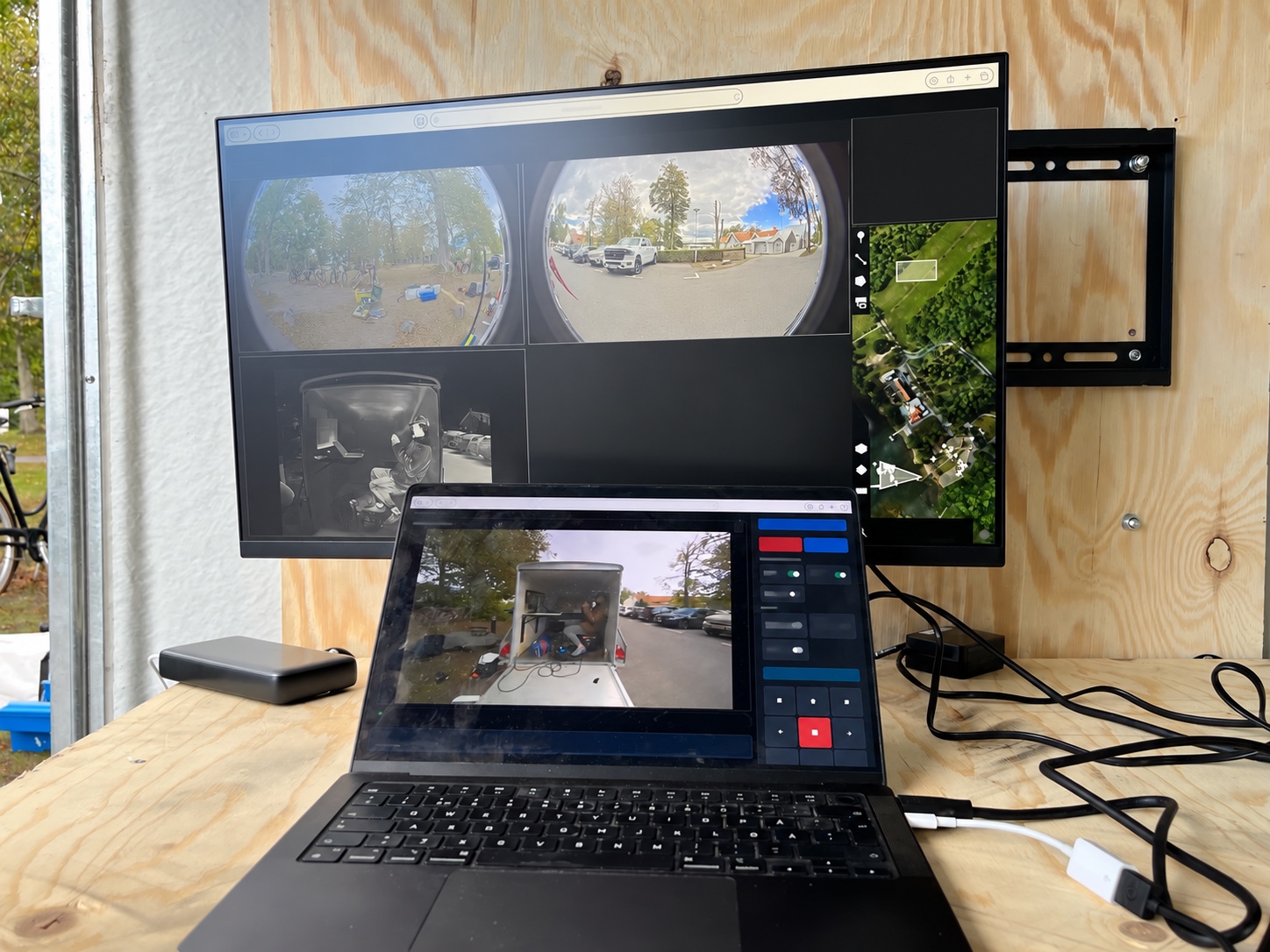
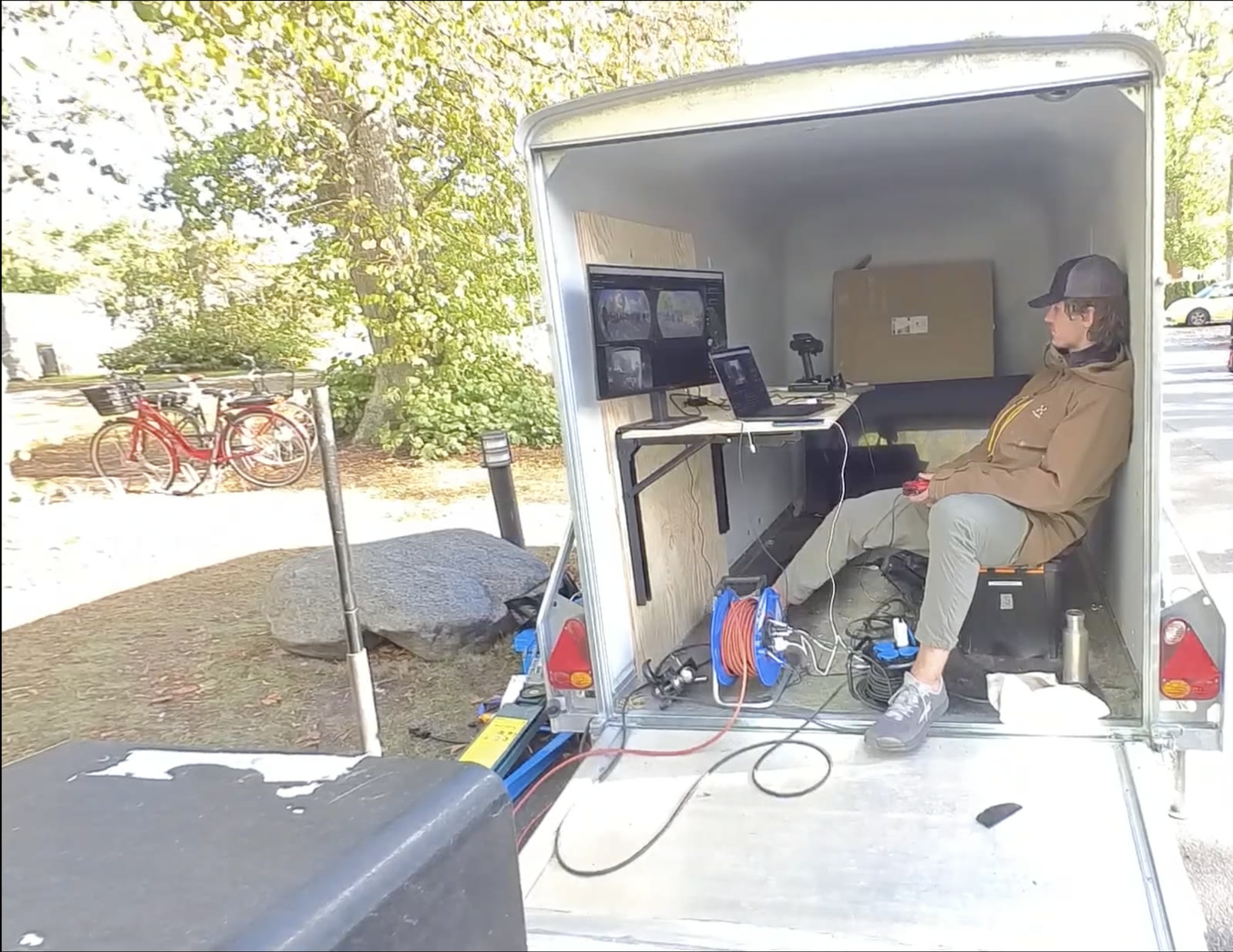
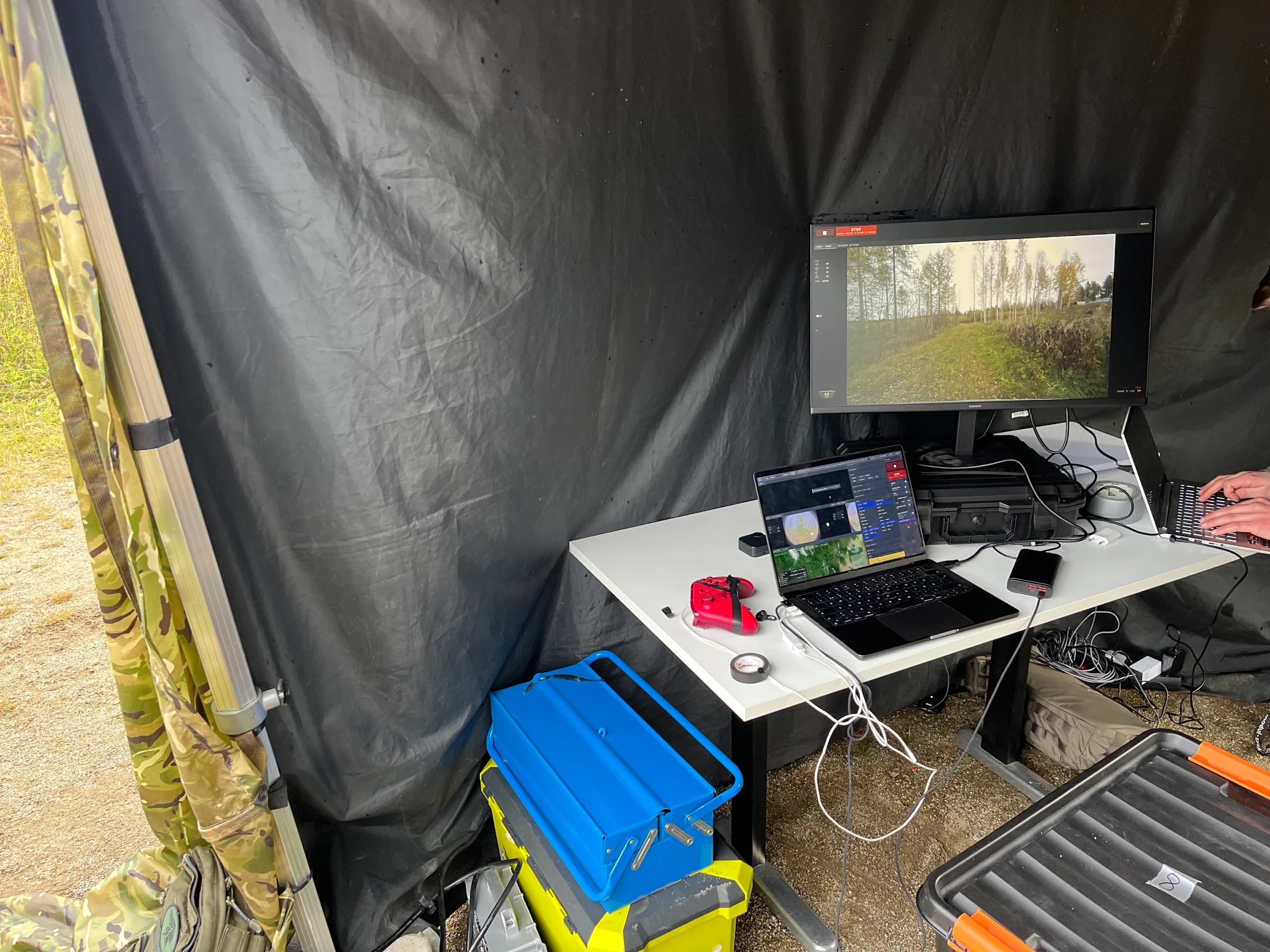
Remote operations are enabled by our in-house built Eira Core:
*How we measured
G2G: software timed, camera capture to decoded frame. Excludes exposure and display. Vehicle: NVIDIA Jetson AGX Orin. Operator: MacBook Pro M3.
< 50 ms: average over 30 min. Parked, 120 Hz capture, 30 fps video, one mobile link on the UGV and a separate one on the operator.
< 85 ms: average over 3 drive sessions, 1.1 h. Forest, public 5G NSA, operator also on mobile. Capture and streaming reduced to lower compute and fit the small bandwidth.
fps: front camera frames delivered of those sent at 30 fps, average. 29.9: 3 × 60 s parked. 29.6: 29 min of the drive sessions. Front runs at lower fps on purpose when reversing or on a thin link.
40 ms: 60 s run, parked, both stacks at once on one link.
Control: operator app to vehicle receive, median. < 20 ms: best 10 min of a session, 5 Nov. < 40 ms: the 3 drive sessions above. Network only, excludes controller, onboard software and actuators.